
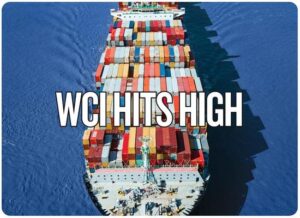
Drewry WCI Hits 15-Week High as Carriers Tighten Asia-Europe Capacity
Drewry’s World Container Index increased 2% to $4,585 per 40-foot container on October 22, its second consecutive weekly gain and highest reading…
Read More →One place for live maritime intelligence, practical decision tools, industry events and focused reporting.
Latest analysis and reporting across maritime, technology, cruise and naval markets.
Drewry’s World Container Index increased 2% to $4,585 per 40-foot container on October 22, its second consecutive weekly gain and highest reading…
Read More →
ShipUniverse / Asset cycle / 23 October 2026 56 ships.$933 million.Fleet exit. Taylor Maritime is selling its last owned bulker. The next…
Read More →
South Korea’s HD Hyundai and U.S. engineering and construction group Kiewit have agreed to form HD Kiewit Shipbuilding, a joint venture that…
Read More →
Maritime Connectivity Failure Stress Test Riga Is Building a Port Network Designed to Fail Gracefully Riga is becoming a live laboratory for…
Read More →
The United States and Denmark signed a maritime cooperation memorandum on October 22 that creates a framework for bringing Danish workforce expertise,…
Read More →
Mazagon Dock Shipbuilders has moved its proposed Dighi and Dugarajapatnam greenfield shipyards beyond the memorandum-of-understanding stage by issuing a single competitive tender…
Read More →
ShipUniverse Naval Decision Report Spain Wants More VLS Cells and a Cloud-Hosted Combat System: How Much Missile Capacity Does a Modern Frigate…
Read More →
ShipUniverse Cruise Shipbuilding Capacity Report Why Cruise Lines Can Raise Billions but Still Cannot Get Another Ship The cruise industry knows how…
Read More →
A South Korean tanker group that was barely known outside shipping circles before the Iran conflict has become one of the most…
Read More →
QatarEnergy has signed two long-term agreements to buy up to 4 million tonnes of U.S. LNG per year from Cheniere through 2054,…
Read More →
Two critical vulnerabilities in the PHP web runtime triggered an international cybersecurity emergency on October 21, with attackers now attempting exploitation at…
Read More →
ShipUniverse / Maritime Capital / Decision Report $13.4 Billion for Britain’s Biggest Port Operator: Why Are Infrastructure Funds Buying Ports Like Utilities?…
Read More →
Warship Inspection Automation Stress Test $300 Million for Robots to Inspect Warships: Is Manual Ship Inspection About to Disappear? The Navy has…
Read More →
A disruption centered on LNG tankers in the Persian Gulf is now reshaping demand for bulk carriers thousands of miles away. Global…
Read More →
The U.S. Coast Guard is independently testing the commercial market for icebreaking support in both the Great Lakes and Northeast as the…
Read More →
ShipUniverse Cruise Deployment Report The Traditional Cruise Season Is Dying Northern Europe used to be a summer deployment. Germany is increasingly treating…
Read More →
The Panama Canal closed fiscal 2026 with 13,951 vessel transits, 521 million CP/SUAB tons and preliminary revenue of B/.6.6 billion, marking a…
Read More →
Eastern Pacific Shipping has named the 93,000-m³ Terra Clove at HD Hyundai Heavy Industries in Ulsan, creating the world’s first ammonia dual-fuel…
Read More →
ShipUniverse Naval Decision Report China Built 2.35× America’s Naval Tonnage in Two Years: Can the U.S. Industrial Base Keep Up? China built…
Read More →
NATO has launched the fourth and final 2026 iteration of Neptune Strike, bringing together 17 allied nations, more than 20 naval vessels,…
Read More →Browse the latest 24 tools or instantly search every published ShipUniverse maritime tool.
Fleet Crewing • Seafarer Repatriation • Travel Logistics • Port Clearance…
Open →Marine Claims • Hull & Machinery • Protection & Indemnity •…
Open →Newbuilding Contract Control • Yard Schedule • Variations • Cash Calls…
Open →Project Cargo • Deck Strength • Sea Fastening • Heavy Lift…
Open →Emissions Assurance • Fuel Traceability • Voyage Scope • Verifier Evidence…
Open →Tankers • Marine Terminals • Berth Interface • UKC • Mooring…
Open →Cruise Operations • Port Diversions • Excursion Margin • Guest Credits…
Open →Ports / Dredging / Material Placement / Productivity / Engineering Economics…
Open →Offshore Survey · ROV/AUV Operations · Workable Windows · Spread Economics…
Open →Freight Procurement • Carrier Contracts • Accessorials • Invoice Audit •…
Open →Marine Cargo • Shortage Reconciliation • Damage Surveys • Insurance Adjustment…
Open →Port Logistics • Yard Density • Container Dwell • Truck Appointments…
Open →Fleet Compliance • Class / Statutory Surveys • Certificate Windows •…
Open →Drydock • Work Packages • Critical Path • Contractors • Changes…
Open →Container Logistics • Free Time • Carrier Per Diem • Terminal…
Open →Naval Logistics • Fuel / Stores • Support Ships • Replenishment…
Open →Cruise Port Calls • Tender Fleet • Passenger Flow • Shore…
Open →Ship Recycling • IHM Part I/II/III • Survey Evidence • Hazard…
Open →Container Terminals • Berth Occupation • Crane Intensity • Vessel Delay…
Open →Offshore DP Operations • Directional Loads • Thruster Allocation • Power…
Open →Marine Operations • Fender Energy • Mooring • Hose Hydraulics •…
Open →Sanctions • AIS Integrity • Beneficial Ownership • STS • Counterparties…
Open →Biofuel Grades • FAME / HVO • Fuel Treatment • Materials…
Open →Time Charter • Speed Warranty • Daily Bunkers • Good Weather…
Open →